
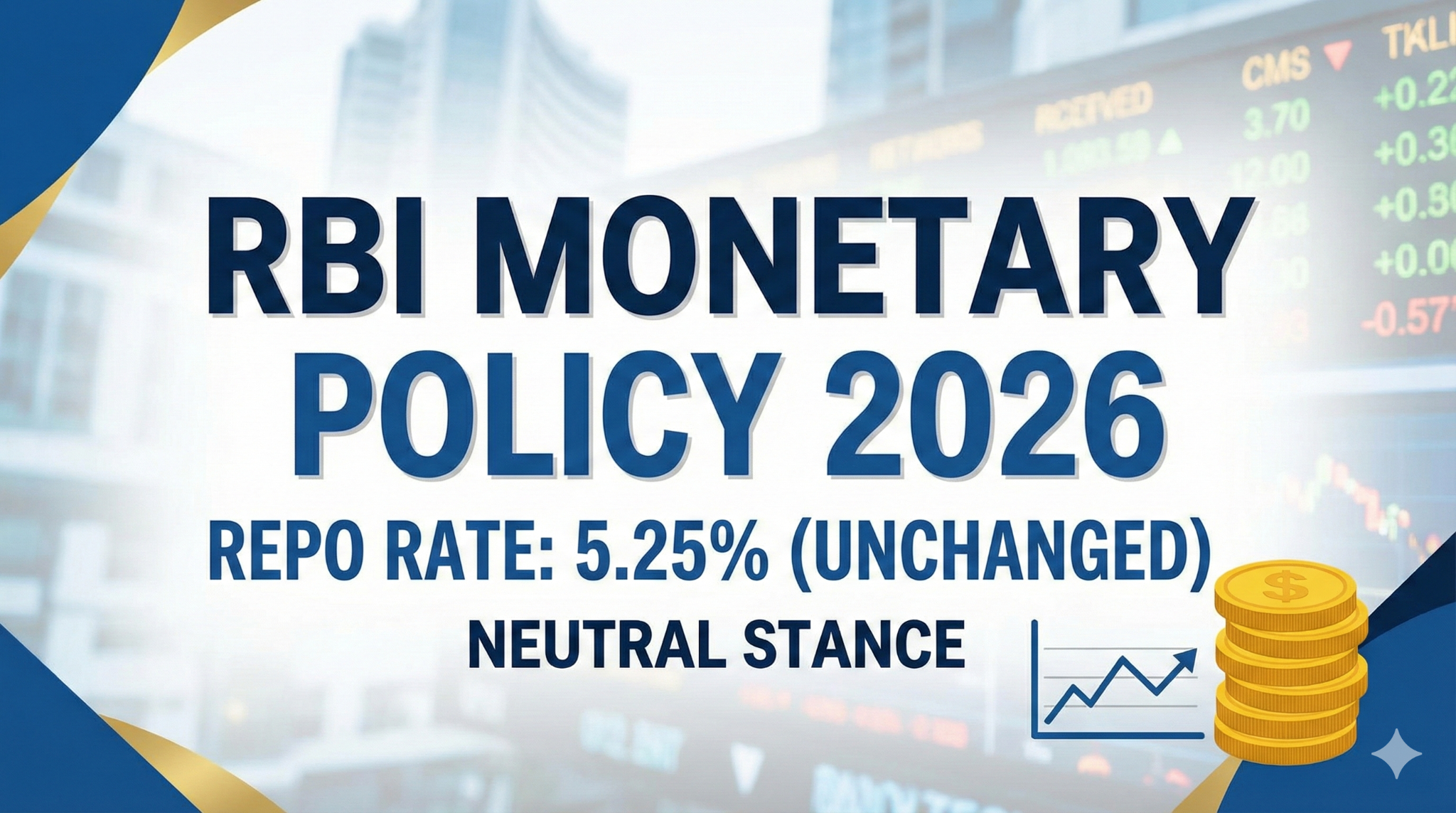
The Monetary Policy Committee (MPC) of the Reserve Bank of India (RBI), at its meeting held on February 6, 2026, voted to keep the repo rate unchanged at 5.25% with a “neutral” stance. Reverse repo remained unchanged at 3.75% and other rates including MSF and Bank Rate at 5.75% did not see any change either.” This prudent stance reconciles inflation targeting (CPI is expected to remain at 2.1% by FY26) with an upgrade in the economic growth forecast to 7.4%. For the salaried professionals, and families budgeting all of their expenses on sites like wealthforge. alive, that translates to steady but not thrilling returns on savings — time for you to adjust your financial plan.
Governor Sanjay Malhotra also pointed out risk from globa rupee depreciation (beyond ₹90/USD) and surge in gold prices stoking core inflation. There is still ₹70,000 crore of excess liquidity on an average, which provides the banks leeway without having to resort to pass-through rate hikes. Nothing big Either way, but the policy signals no cuts Anytime soon with a bias Toward rupee stability over tariff relief.
What we have cover!
How It Affects Your Savings Accounts and Fixed Deposits
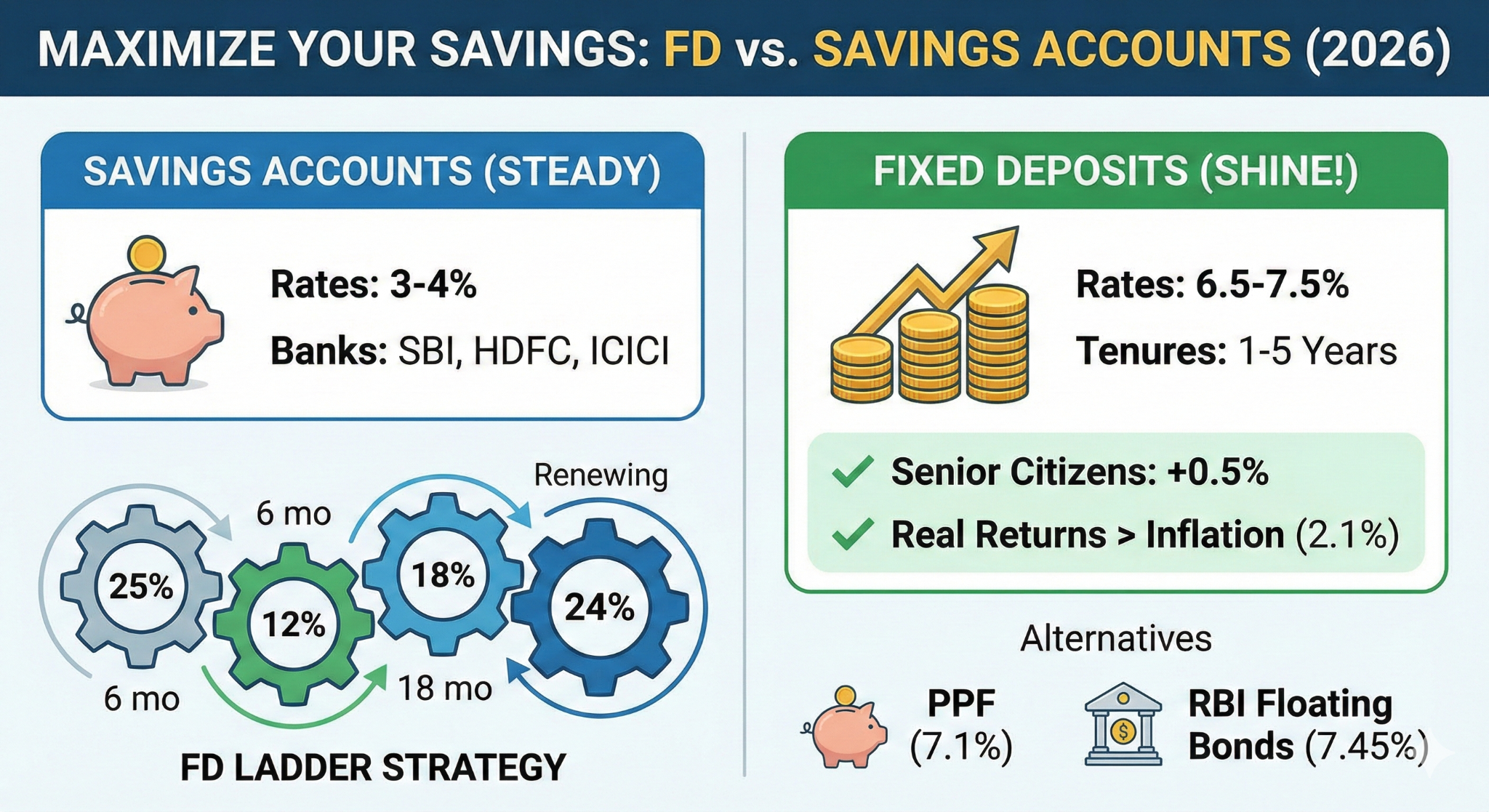
Savings account rates from major banks (SBI, HDFC, ICICI) will hover at 3-4%, unchanged due to the steady repo rate. Fixed Deposits (FDs), however, shine at 6.5-7.5% for 1-5 year tenures—real returns beat inflation (2.1%) by 4-5%. A ₹5 lakh FD could earn ₹35,000+ annually, tax-free up to ₹40,000 in the old regime.
Senior citizens get an extra 0.5%, making 5-year tax-saver FDs ideal now. Strategy: Create an FD ladder—split into 25% chunks renewing every 6 months—to capture potential future cuts. Alternatives like PPF (7.1%) or NSC hold steady, but check RBI Floating Rate Bonds at 7.45% for higher yields via banks.
Loan EMIs where they are: What borrowers need to know
No repo rate cut implies elevated home loan EMIs; an ₹50 lakh, 20-year loan at 8.5% costs you ₹35,000 a month. Floating rates (99% of loans) are linked to repo, so prepay 5-10% annually to shave interest. New homebuyers: Hold on till the April MPC when inflation may rise as high as 4.2%.
Credit cards and personal loans (10–12%) hurt — pass on new debt. Positive note: RBI upped the collateral-free loans available to MSMEs, doubling it to ₹20 lakh from ₹10 lakh — a boon for freelance web apps or side hustles. Gold loans Gold loans are stable even as prices rally. Ideal for short-term requirements.
Investment Shifts and Opportunities
Neutral stance boosts equity confidence—Nifty could rise 15% in FY26 on infra growth. Shift from F&O trading (hit by Budget STT hikes) to SIPs in equity mutual funds (12-15% long-term returns). Debt funds offer safe 6-8% amid low inflation.
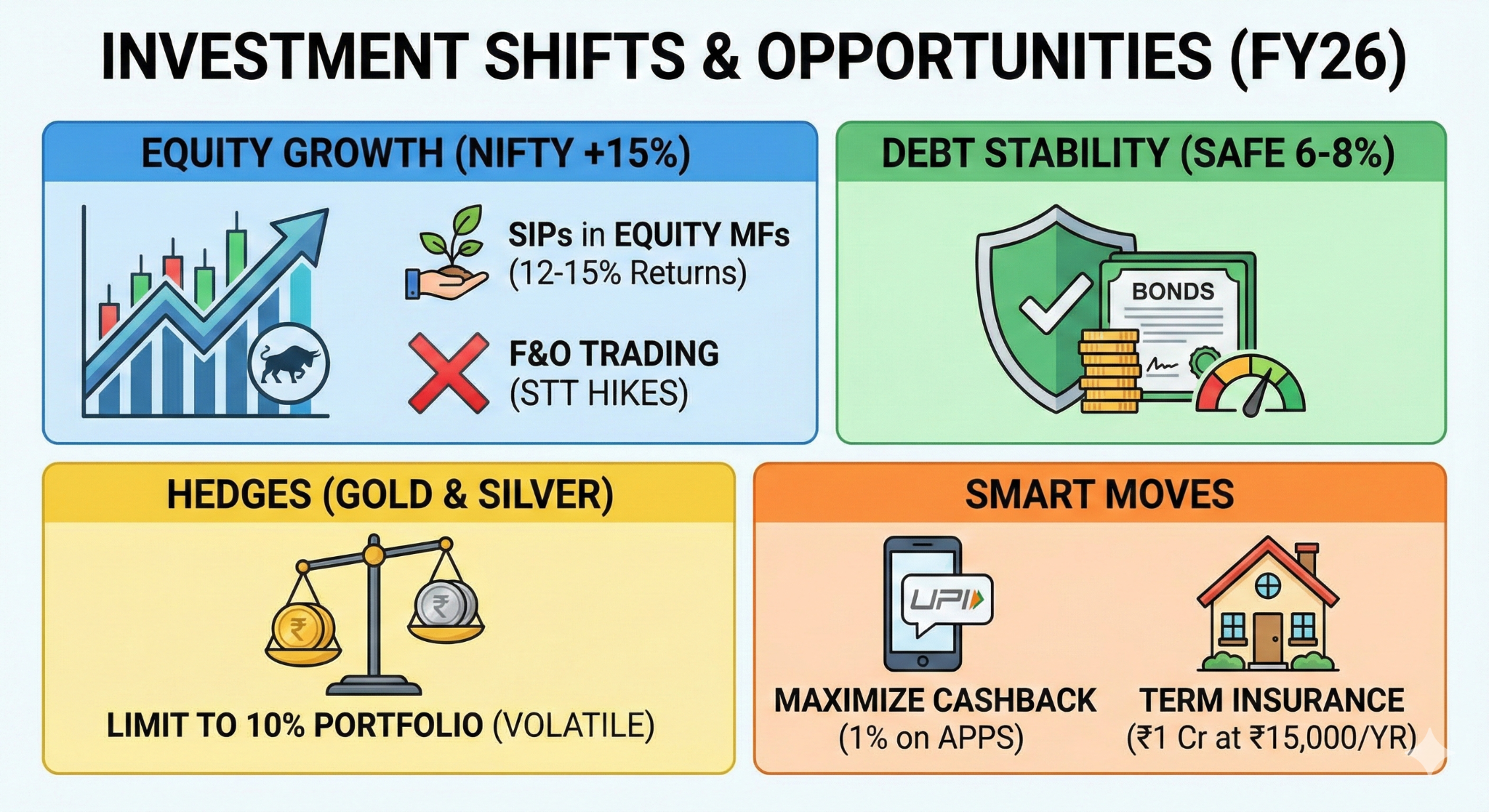
Gold and silver as hedges? Limit to 10% portfolio—core inflation drivers but volatile. UPI gets new safeguards; maximize cashback via debit cards (1% on apps). Insurance stays affordable—₹1 crore term plans at ₹15,000/year.
5 Practical Money-Saving Tips Post-Policy
- Budget Men Wah Again: 50/30/20 —- 50 % needs (EMI, groceries), 30 % wants, 20% savings. Apps such as Walnut keep an eye on it; auto-transfer ₹10,000 to FDs each month.
- Create an Emergency Fund: 6 months’ expenses in liquid FDs — no fight with inflation.
- Debt Swap Smartly: Convert high-interest credit card debt to personal loans at 9-10%, save ₹5,000/year.
- Tax Optimize: Claim deduction on FD interest under 80C (old regime), add NPS for employer match of up to 14%.
- Inflation-Proof Groceries: Stock up on the basics now (CPI Q2 at 4.2 %); meal prep saves ₹5,000/month.
Middle-Class Families Long-Term Wealth Formula
The rupee “enjoys a structural advantage” from RBI’s commitment to debt reduction (to half the GDP by 2031) that will guarantee it stability and less volatility. Invest: 60% debt (FDs/PPF), 30% equity SIPs, 10% gold/digital gold. Track April 2026 MPC for cut clues — good for fixing home loans.
This policy is biased in favor of savers over borrowers and only reinforces disciplined behavior. Use EMI calculators with 5.25% repo input to personalize. Publish on wealthforge.live with SEO like “RBI policy 2026 FD rates” or “repo rate impact savings.” Disclaimer: Not financial advice—consult a professional.