
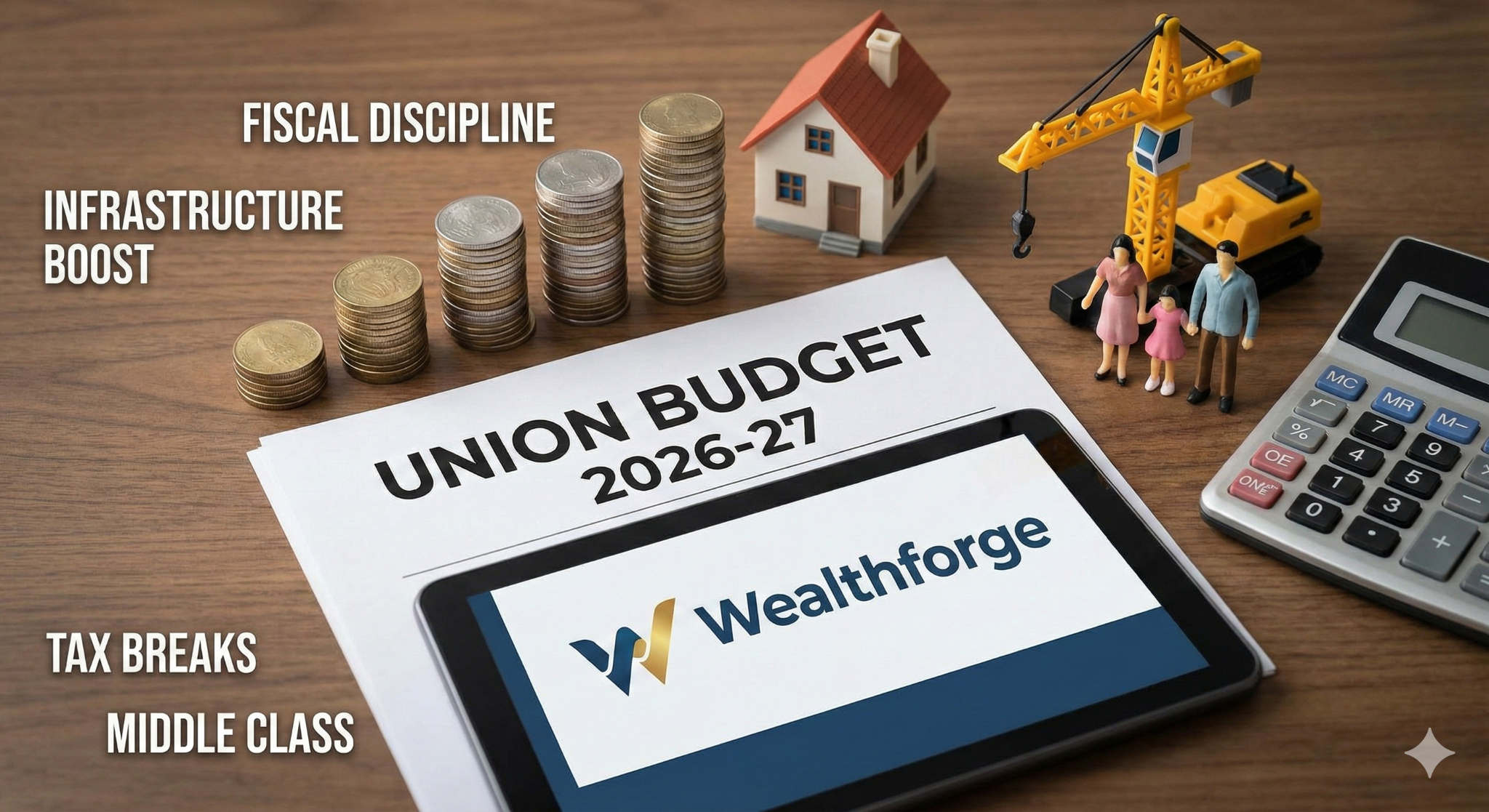
Budget 2026-27 Union Budget for 2026-27, which was tabled on February 1, was themed around ‘fiscal discipline’, even as it provided a fillip to infrastructure and gave tax breaks to the middle class. Overall expenditure is pegged at ₹53.47 lakh crore, higher by 7.7% from revised estimates of last year while budgeted fiscal deficit for the next year is targeted to be at 4.3% of GDP. For wealthforge. So for money minded live readers, here are some changes in taxes deductions and incentives that salaried people and families can leverage to maximize your money this financial year.
What we have cover!
Expenditure and Economic Growth Projections
Government’s spending goes up ₹53,47,315 crore in 2026-27; capital outlay to rise by 11.5% setting high to 12.21 lakh crore towards infrastructure including roads, railways and urban projects. Nominal GDP growth is budgeted at 10%, conducive to enlarged taxes, without much elevation in slabs. Revenue receipts increase 7.2% to ₹36.51 lakh crore on the back of an 8% jump in gross tax revenue.
The interest payment part takes 26 per cent of total spend (₹14.04 lakh crore), while the primary deficit comes down to 0.7 per cent of GDP, signalling better control over borrowing. This stability translates into more predictable interest rates on savings accounts and FDs, allowing you to plan long-term wealth creation without the worry of sudden rate shocks.
No Changes in Income Tax Slabs – Relief Continues
For AY 2026-27, the income tax slabs have not changed and so you continue to enjoy benefits of new regime such as a higher rebate for incomes up to ₹60,000. Average incomes Standard deduction for salaried taxpayers increased to ₹75,000 from ₹50,000; this translates into a tax-saving of ₹5,000-₹10,000 for middle-income earners (Those earning in the ₹10-20 lakh bracket).
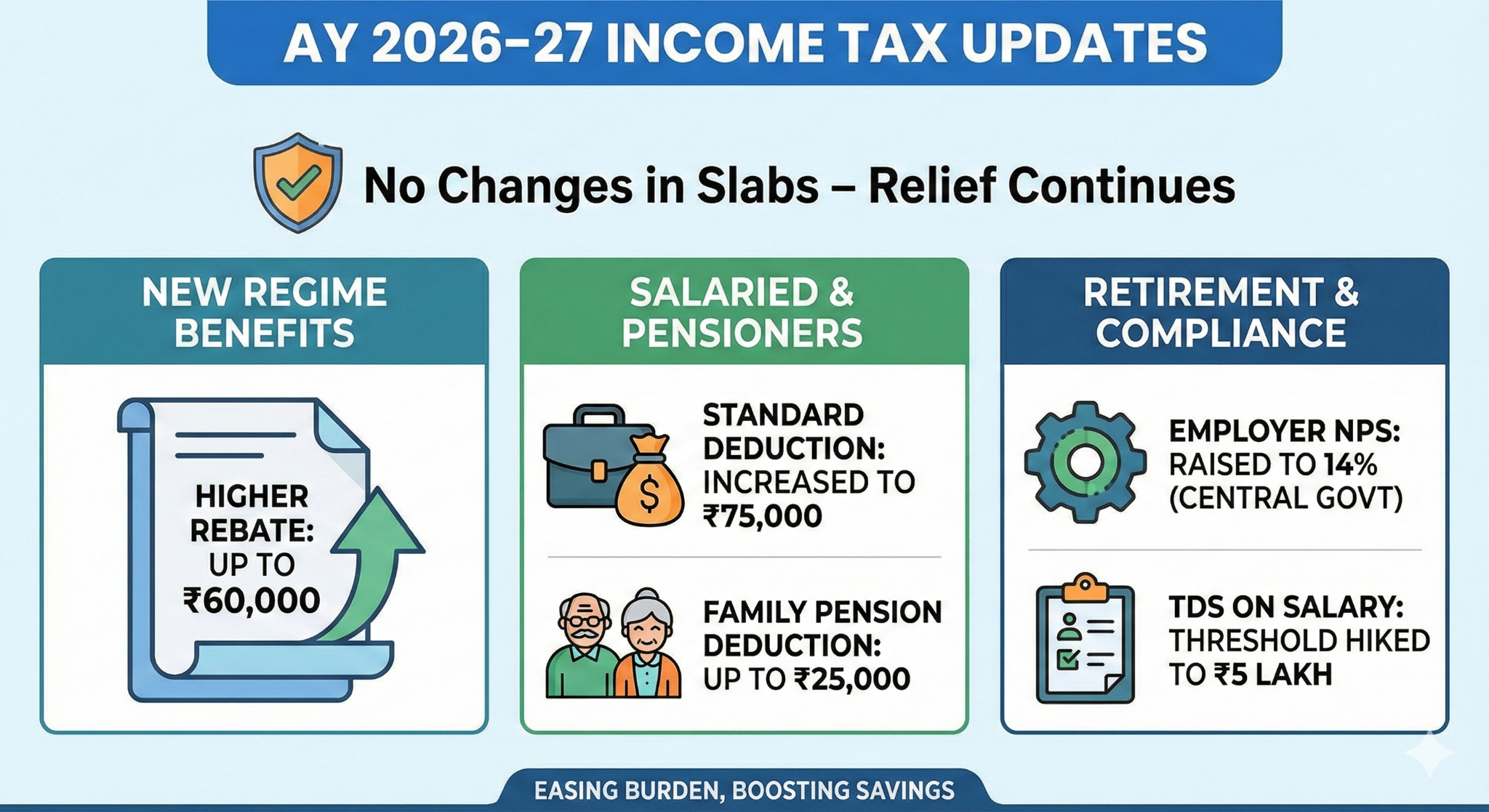
A big boon for retirement planning, family pension 2 deduction goes up to ₹25,000 (from ₹15,000), which would help seniors – while the employer NPS contribution limit has been raised to 14 % from 10% central govtemployees. No tax on gifts from specified relatives but TDS threshold on salaries hiked to ₹5 lakh, easing compliance burden for lower earners.
Key Tax Proposals Impacting Investments and Savings
Securities Transaction Tax (STT) hikes: Options from 0.1% to 0.15%, futures from 0.02% to 0.05% – this raises trading costs, so shift focus from frequent F&O to long-term equity SIPs or mutual funds. Share buybacks now taxed as capital gains (22% for corporates, 30% for promoters), discouraging short-term flips.
No deductions for interest on mutual fund/dividend income (previously up to 20%), pushing investors towards growth funds over income ones. MAT rate drops to 14% from 15%, with credits limited to 25% in new regime – good for businesses but watch corporate earnings impact on your portfolio.TCS relief: Education/medical remittances over ₹10 lakh now 2% (from 5%), overseas tours 2% flat – saves ₹30,000+ on ₹15 lakh study abroad costs.
Now its benefits for NRIs and Smaller Tax Payers
This offers graded relief to small taxpayers (returning NRIs) with waiver of penalties on payment of tax or fixed fee -great if you’re investing overseas through platforms, such as Groww. 5 Yr Income tax holiday for Electronics capital goods suppliers & 100% exemption in GST, Financial support large-scale industrial parks and exemptions on compliance cost. Global income liability NRI up to 5 yrs.
IFSC units to get 20-year tax holiday (from the earlier 10), taxed at the concessional 15% afterwards – boosts investment in GIFT City flows for dollar-denominated FDs or bonds.
Budget Insights’ Personal Finance Tips and Advice

- Maximise New Regime Savings: With slabs and higher deductions intact, make the switch if your income <12.75 lakh — utilise ₹75,000 standard deduction + NPS to save ₹25,000+ tax annually.
- Infra Push Benefits: ₹12.2 lakh crore capex equals jobs in roads/rail – upskill via free schemes; invest in infra mutual funds for 12-15% returns.
- Subsidy Stability: Food (2.28) and fertilizer subsidies unfluctuating – rural folk save on the essentials; urban rich use PM Surya Ghar to get free power through solar (22,000 crore outlay).
- Debt Reduction Target: Central debt to 55.6% GDP, aiming for 50% by 2031—lower future inflation helps fixed income savers; park in RBI bonds or PPF at 7.1%.
5. State Transfers Up 12%: ₹26.21 lakh crore to states, including ₹1.85 lakh crore capex loans – local
schemes like PMAY get boost (₹54,917 crore rural), apply for affordable housing subsidies
Broader Impacts on Household Wealth
Budget gives ’Viksit Bharat’ a push with SME funds(₹10,000 crore), Textile schemes and Energy Corridors -Small Business owners can get subsidized credit. Disinvestment target increased to ₹80,000 crore (up 136%) indicates PSU stake sales – buy on dips in shares such as ONGC for dividends.
This is a stable budget for the middle class (your core audience): No surprises, clear focus on growth. Monitor RBI MPC post-budget for rate cues. Calculate your tax saving using Excel: Income – (Slab rates + ₹75k deduction) = Net tax. As for the 50/30/20 rule, aim to keep 50% for needs, 30% wants and 20% savings/investments and as these changes are applied.
(872 words) Begin publishing on wealthforge. live with SEO keywords such as ‘budget 2026 tax slabs’, ‘Tax deduction of middle class savings 2026’. Don’t be an idiot: No financial advice, get expert help.